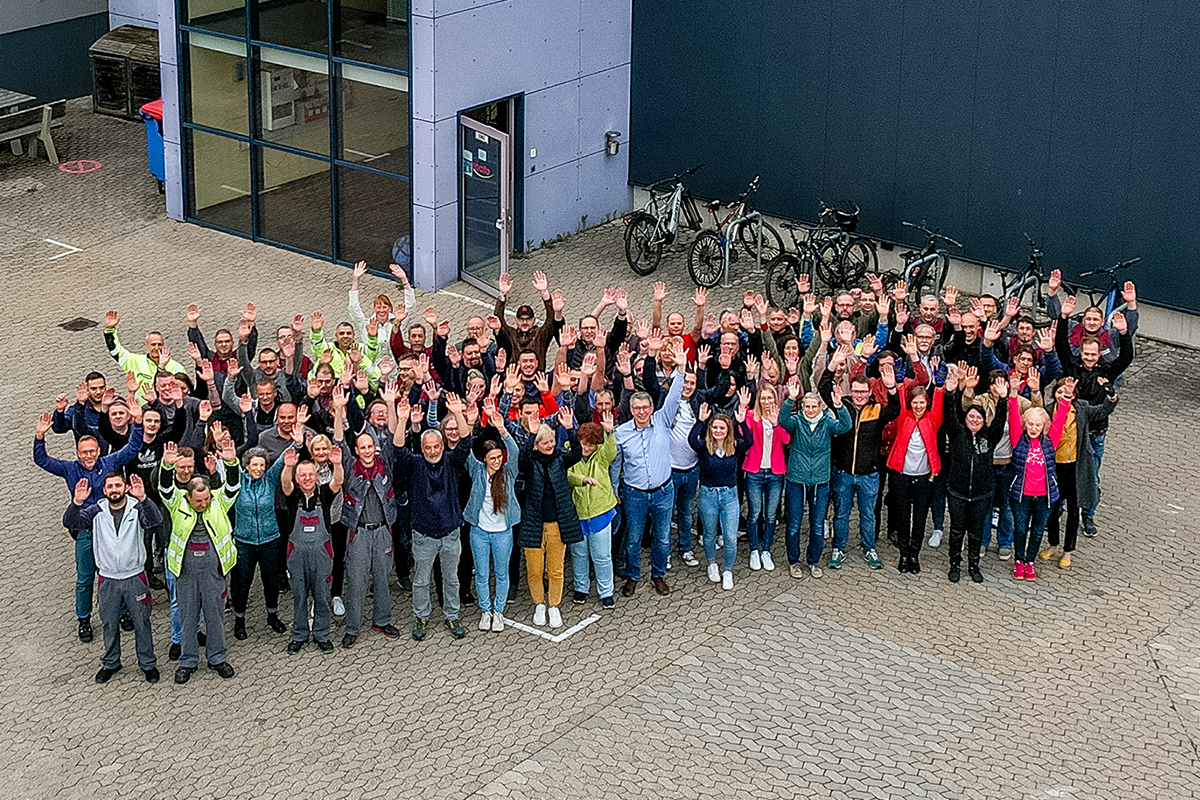

ebalta promotes biodiversity
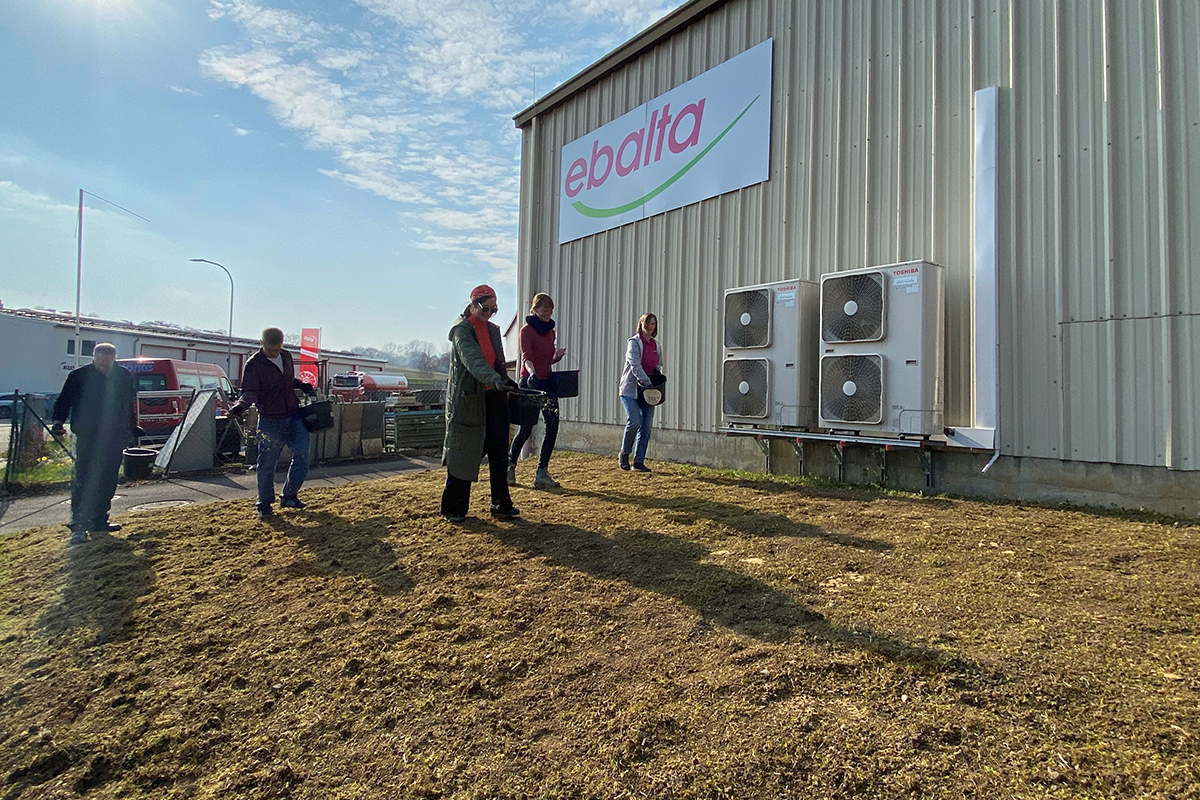
Last week, there was a flurry of gardening activity at ebalta: a group of employees, along with some of their children, were busily raking the fallow land in front of one of the production halls. “We’re creating a flowering meadow here to promote biodiversity,” explains Konstantin Pauli, Sustainability Manager at ebalta, describing the initiative. This is an important project, as insect numbers have been declining dramatically for years. Furthermore, of the roughly 34,000 insect species in Germany, many are critically endangered, and some have even already gone extinct. “With our flowering project, we want to contribute to biodiversity, because insects are important to us: for pollination, as beneficial organisms in forestry and agriculture, and as decomposers for healthy soils,” emphasises Konstantin Pauli.
Support from the professionals
ebalta has brought on board the young Berlin-based company “Artenglück” as a partner for the project. Felix Schulze-Varnholt is a co-founder and managing director, and is overseeing the project on site at ebalta. A graduate in agricultural science, he has been campaigning for more flowering areas throughout Germany, Switzerland and Austria for the past five years. “We now have over 100 partner farmers with whom we have brought fallow land back to life,” reports Felix Schulze-Varnholt. “For some time now, we have also been advising companies that have spare land available for flowering meadows.” Over 100 hectares of flowering areas have already been created in this way. “We want to make native species happy again,” says Felix Schulze-Varnholt, summarising the aim of his work.
The area in front of Hall 5 at ebalta has now been prepared, and it’s time to start sowing. The seeds, supplied by the wild plant seed supplier Rieger-Hofmann in Raboldshausen near Blaufelden, consist of 40 different wildflower and herb seeds. “The first flowers will be visible in about eight weeks,” promises Felix Schulze-Varnholt. Initially, the mostly annual plants will sprout, such as cornflowers and sunflowers, coriander and linseed. The wild herbs will initially form only a rosette of leaves this year and will not bloom in full splendour until next year.
Further climate protection initiatives in the pipeline
To finish off the gardening project, the seeds are pressed firmly into the ground with a roller. Now it’s a case of being patient until the first shoots appear and, eventually, the flowers too. To ensure the project is a success, Artenglück ebalta will continue to provide advice and support in the coming weeks and months. “This flowerbed is likely to be just the start of various climate protection initiatives,” says Konstantin Pauli. “We’ve got plenty more planned and will continue to be actively involved.”
You can find further information on ebaltas’ sustainability initiatives here.
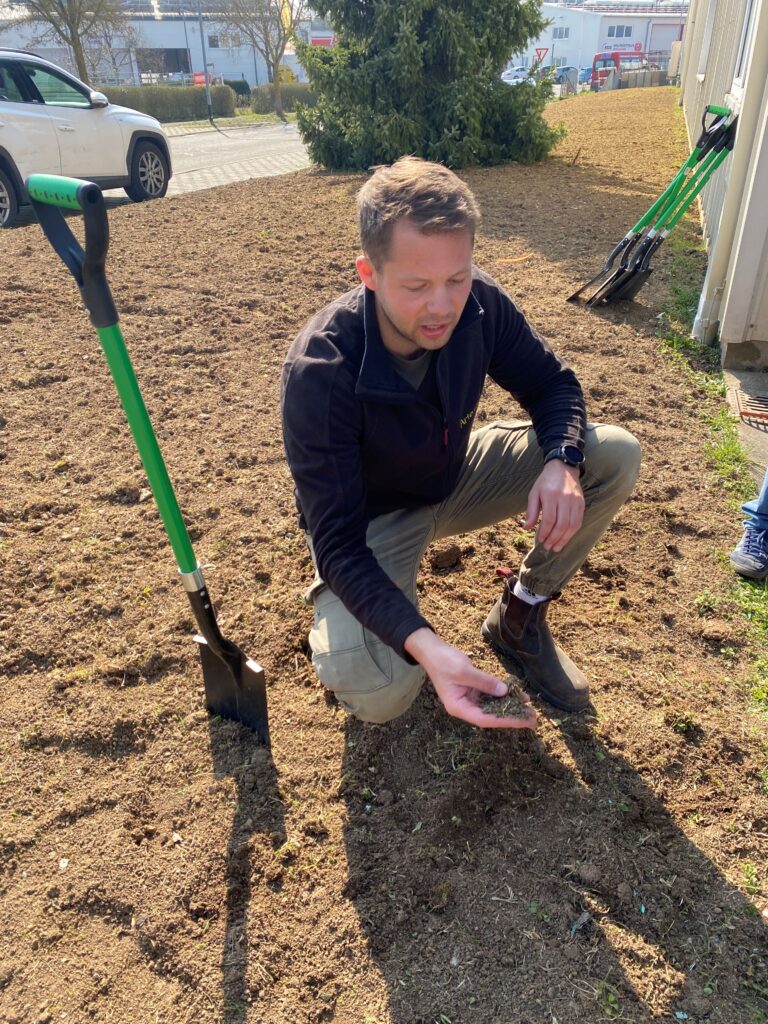
Felix Schulze-Varnholt explains what the soil conditions should be like for a flowering meadow.
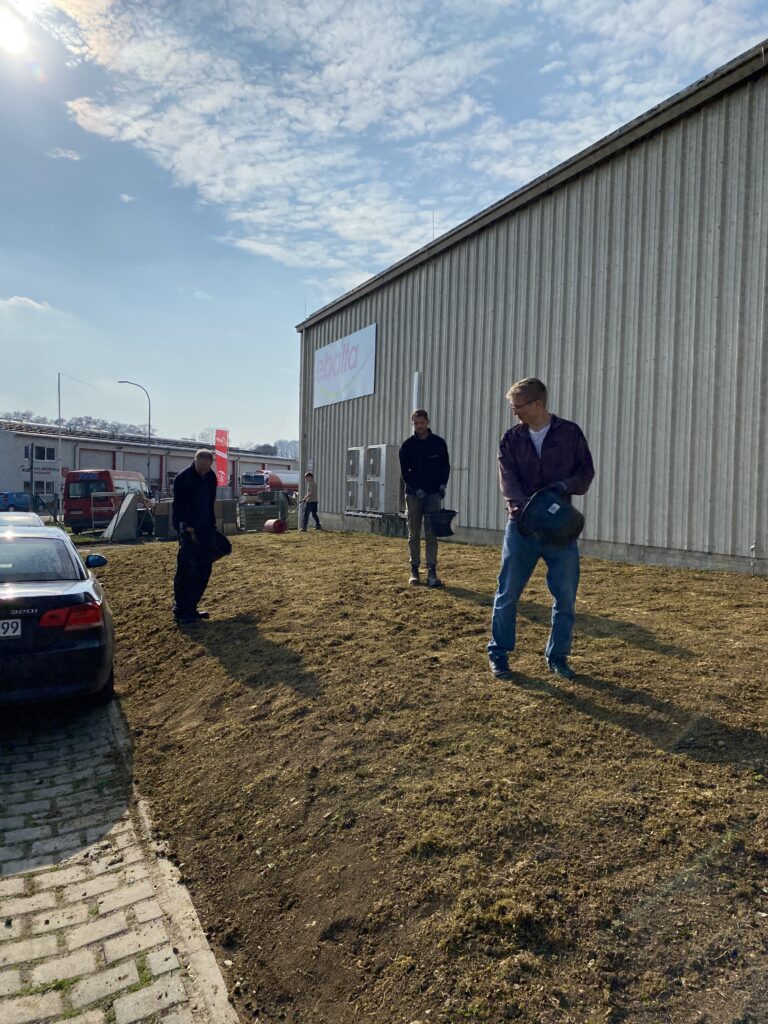
ebalta staff sowing seeds.
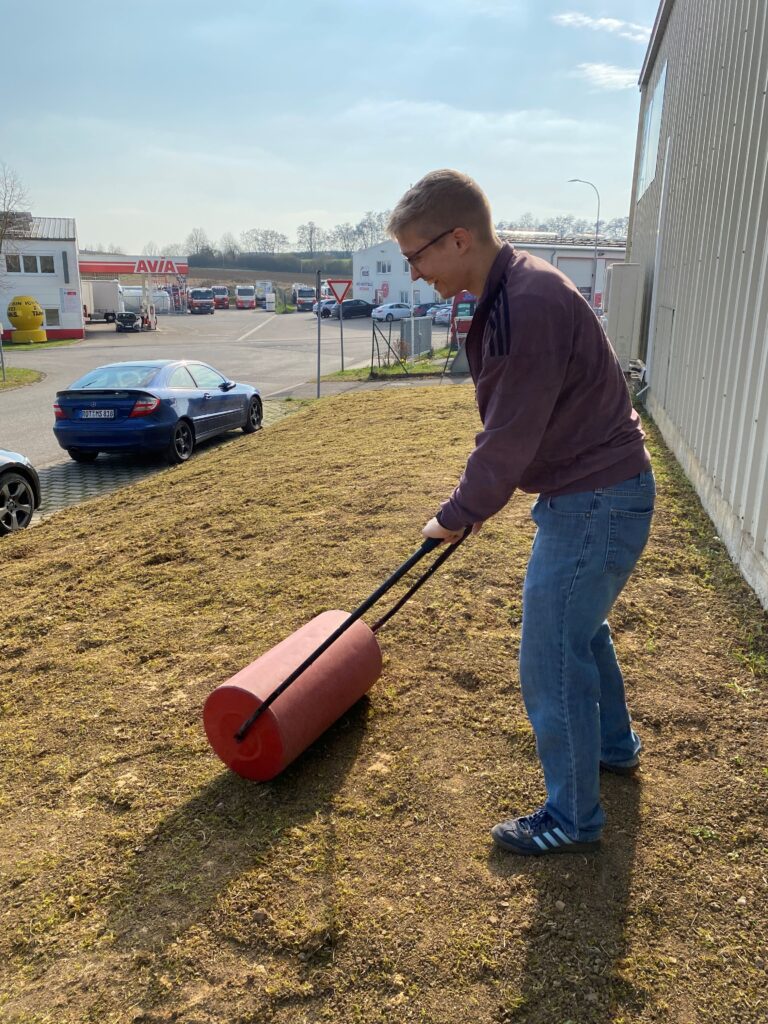
Konstantin Pauli takes care of the final tasks after sowing.